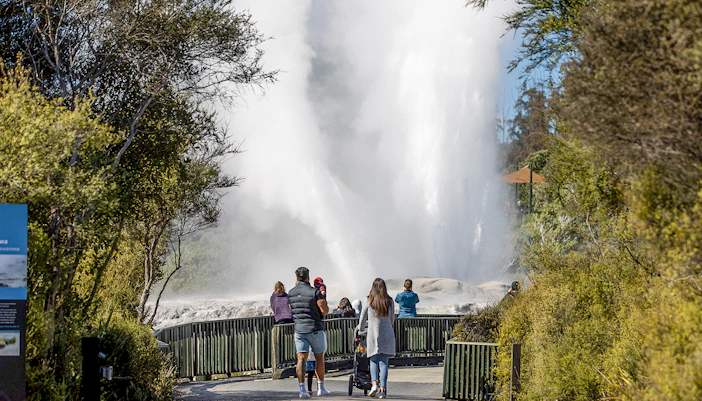
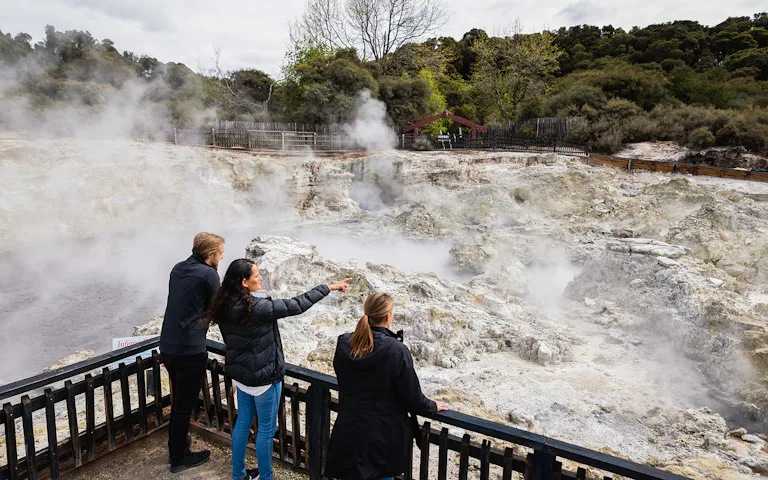
- Location: Tikitere, about 15–20 minutes from Rotorua CBD
- Known for: Intense geothermal activity, mud volcanoes, hot waterfall, mud bath & sulphur spa
- Opening hours: Daily from 10am to 6pm (last entry mid-afternoon)
- Time needed: Allow 1–1.5 hours for the geothermal walk alone, 2.5–3 hours if adding the mud bath and sulphur spa, or 90 minutes for the Twilight Spa experience.
- Best for: First-time Rotorua visitors, geothermal landscapes, spa relaxation, Māori culture
- Accessibility: Partial wheelchair access; spa areas require stairs
- Facilities: Café, gift shop, lockers, showers, restrooms
- Getting there: Self-drive, taxi, public bus + short walk, or pre-booked transfers from Rotorua
- What to wear: Comfortable shoes; old swimwear for spa use
- Top tip: Do the geothermal walk before the mud bath for the best experience
What is Hell’s Gate?
Hell’s Gate is Rotorua’s most active geothermal reserve, known for its dramatic mud pools, steaming vents, and long-standing Māori use of geothermal heat for healing and cooking. Located at Tikitere, this natural site combines raw volcanic landscapes with cultural experiences, including traditional carving and geothermal cooking demonstrations. Visitors can explore via wooden boardwalks, join guided walks for deeper insight, or unwind in the iconic mud bath and sulphur spa—all within a compact, easy-to-navigate reserve.
Quick information
Plan your visit to Hell’s Gate

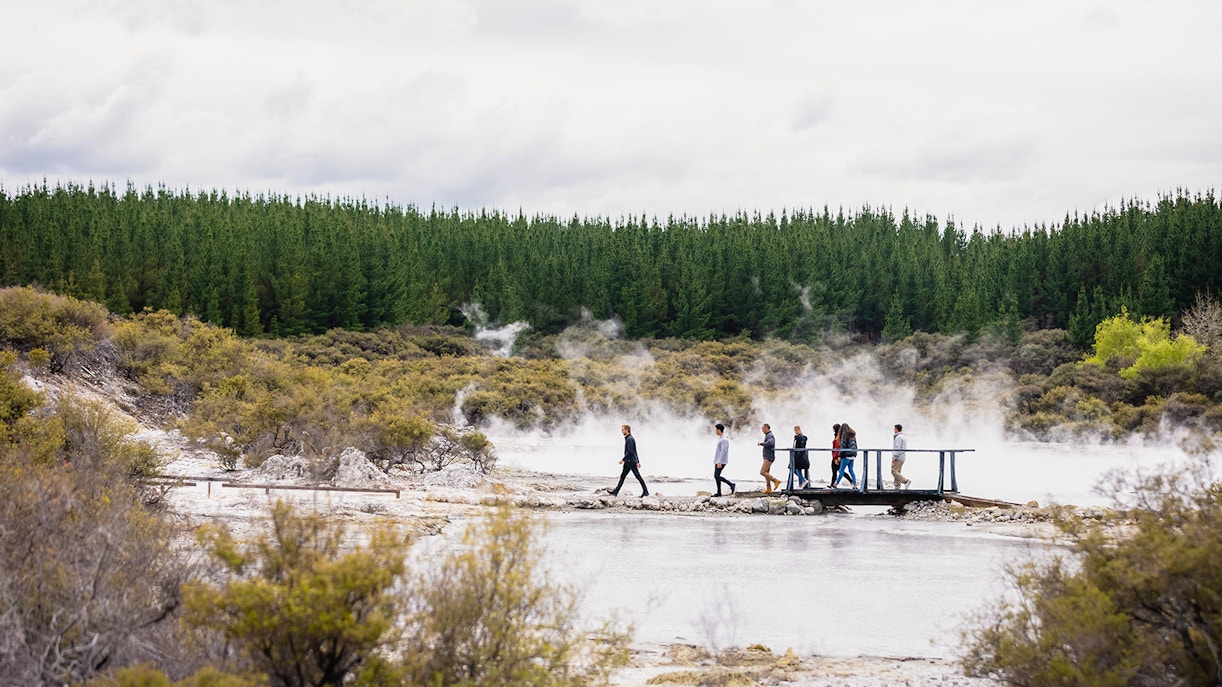
Opening hours
- Opening hours: Hell’s Gate is open daily from 10am to 6pm. To enjoy the full experience, plan to enter by mid-afternoon.
- Guided tour timings: Guided geothermal walks run twice daily at 10:30am and 2:30pm, offering structured access with expert commentary.
- Evening sessions: Twilight Spa experiences are available on selected evenings only and must be booked in advance.
- Holiday variations: Opening hours may vary slightly on public holidays or during special events, so it’s best to check closer to your visit date.
Best time to visit
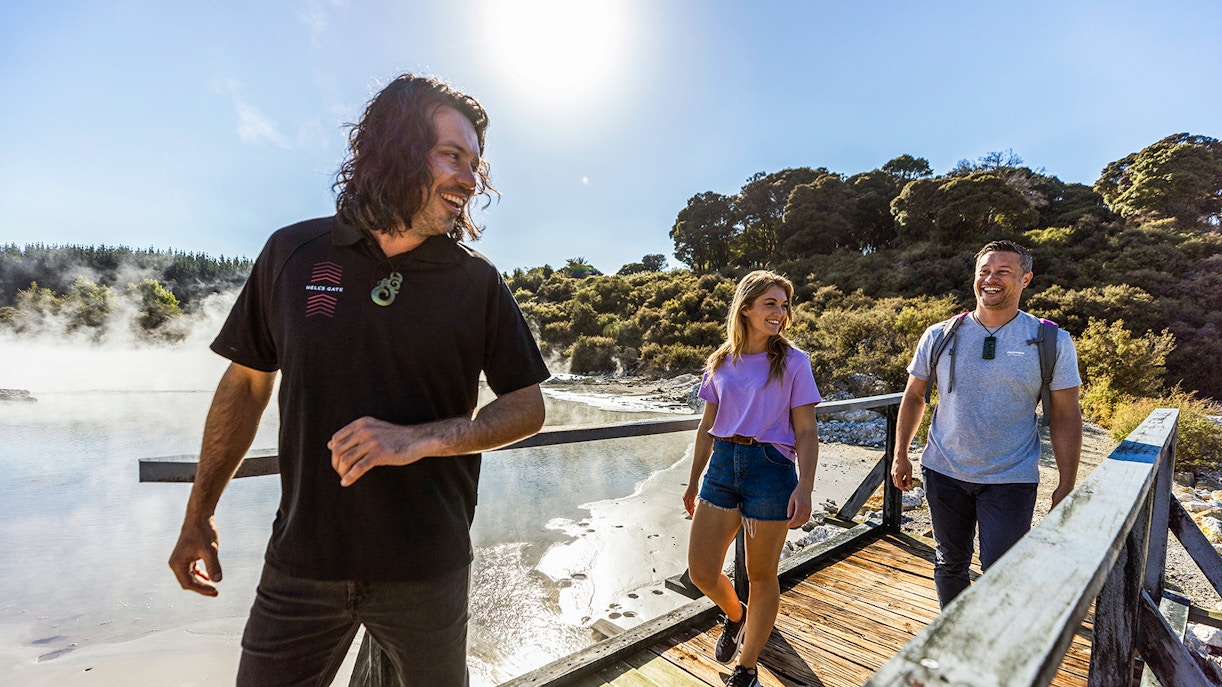
- Dec–Feb (Summer): Warm temperatures and strong geothermal activity; busiest months—visit early in the day or mid-week.
- Mar–May (Autumn): Mild weather, clear views, and fewer crowds; ideal for combining the walk and spa.
- Jun–Aug (Winter): Cool air and dramatic steam effects; quieter overall and great for relaxed visits.
- Sep–Nov (Spring): Comfortable temperatures and good visibility; a balanced time for sightseeing and soaking.
- Best days: Tuesday to Thursday for a calmer experience.
- Best times: Late morning for guided tours or early afternoon if you’re pairing the walk with the mud bath and spa.

Location
- Located in Tikitere, around 15–20 minutes from Rotorua CBD, Hell’s Gate is easy to reach by car or shuttle.
- Address: 351 State Highway 30, Tikitere, Rotorua 3010, New Zealand | View on maps
- The entrance is well signposted from the main road, with on-site parking available.
Explore Hell’s Gate
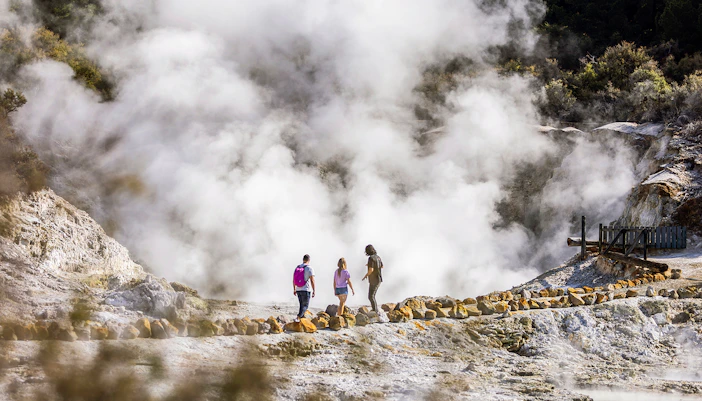
Geothermal walk
Stroll along flat boardwalks past bubbling mud pools, steaming fumaroles, sulphur cliffs, and ochre land-coral formations. Allow about 1–1.5 hours.
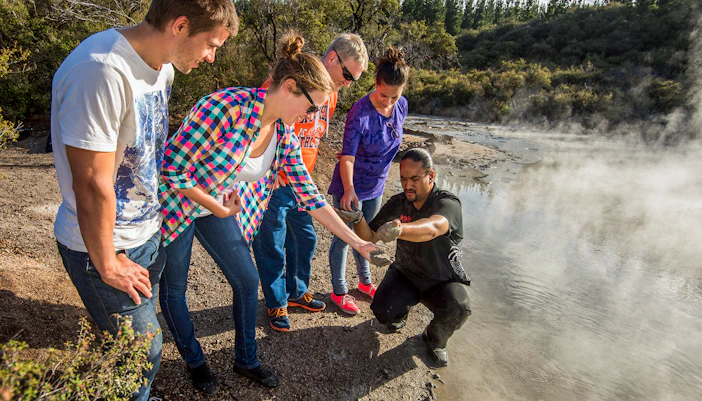
Guided geothermal tour
Join a guided walk to gain insight into the geothermal landscape and how Māori communities have used this area over generations—ideal if you want more context than signage alone.
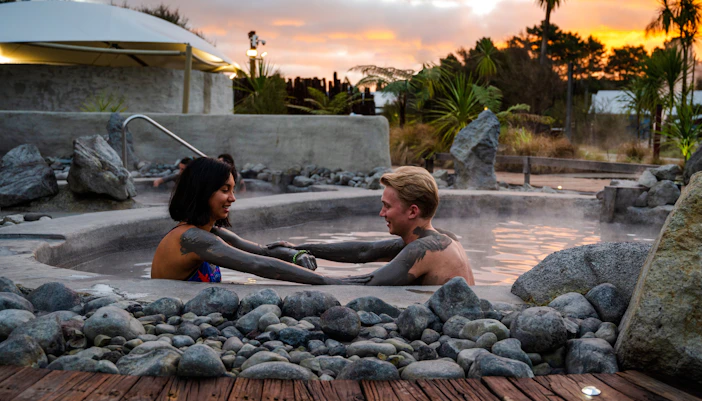
Mud bath & sulphur spa
Enjoy a 20-minute mineral mud soak followed by the sulphur pool. Allow 1.5–2 hours including changing; old swimwear is best.
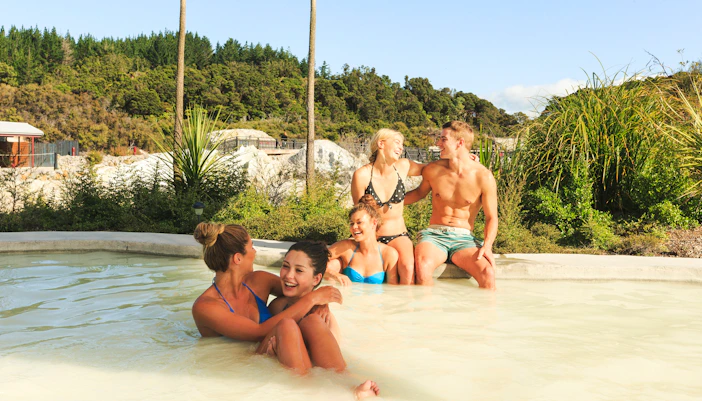
Twilight Spa
A 90-minute evening soak under torchlight—quieter, slower paced, and best for adults and couples.
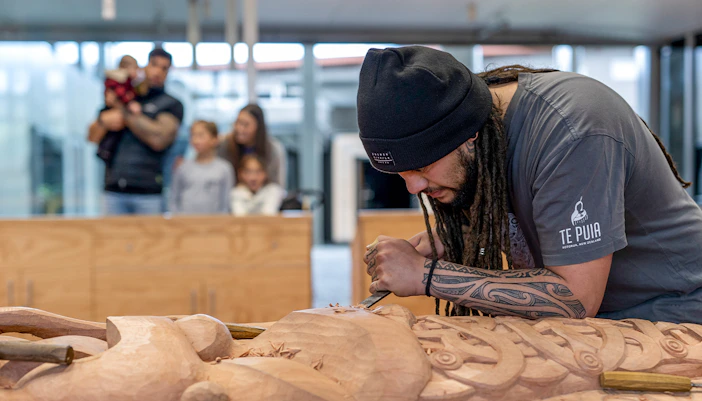
Māori culture experiences
See live carving demonstrations and geothermal cooking pits using naturally heated spring water.
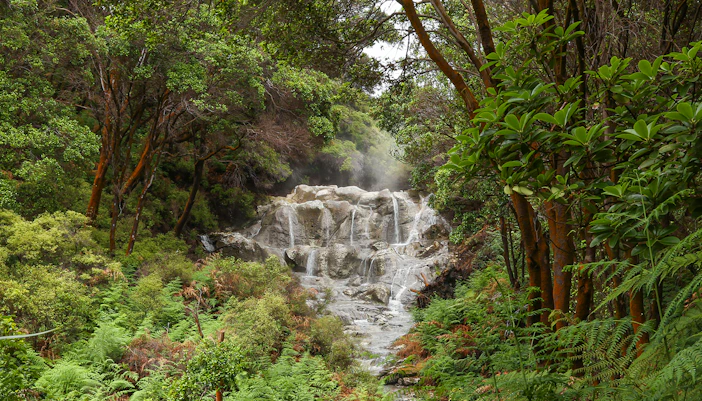
Signature geothermal sights
See New Zealand’s largest mud volcano, the Southern Hemisphere’s largest hot waterfall, steam-filled sulphur cliffs, rare land-coral formations, and traditional cooking springs.
History of Hell’s Gate in a nutshell
Māori have used the Tikitere geothermal area for hundreds of years as a place for healing, cooking, and gathering. Known traditionally as Tikitere, the site’s geothermal activity was harnessed for medicinal mud treatments long before European arrival. In the late 19th century, the area gained attention for its therapeutic properties, leading to its development as a visitor attraction. Today, Hell’s Gate remains one of Rotorua’s most culturally and geologically significant geothermal reserves.
Sustainability & geothermal protection
Hell’s Gate operates within a fragile geothermal environment. Boardwalks protect the land from erosion, spa water is carefully managed, and visitor access is controlled to preserve natural features. Guests are required to stay on marked paths and follow safety guidelines to help protect this active landscape.
Tips for visiting Hell’s Gate
- Start with a guided tour on your first visit: The guided walks explain the geothermal features and Māori use of the land far better than signage alone.
- Arrive earlier in the day: Mornings are quieter and cooler, with strong steam activity and better visibility along the boardwalks.
- Wear proper footwear: Boardwalks are safe but can be damp and uneven in places; closed, sturdy shoes are best.
- Bring old swimwear: Sulphur and geothermal mud can stain light-coloured or new fabrics.
- Remove jewellery before the spa: Sulphur tarnishes metals quickly, including silver and gold.
- Plan your spa timing: Mud bath sessions are limited to 20 minutes, so arrive on time for your allocated slot.
- Allow enough time overall: Set aside 2.5–3 hours if you’re combining the geothermal walk with the mud bath and sulphur spa.
- Book Twilight Spa early: Evening sessions are limited and often sell out, especially on weekends.
- Secure valuables: Use the on-site lockers for phones, wallets, and watches before entering the spa areas.
- Follow staff instructions closely: Geothermal terrain is active, and marked paths must be followed at all times for safety.
Frequently asked questions about Hell’s Gate
Hell’s Gate is known for its intense geothermal activity, including boiling mud pools, steaming fumaroles, sulphur cliffs, and New Zealand’s largest mud volcano. It’s also famous for its traditional mud bath and sulphur spa, along with Māori cultural experiences.
Yes, families can enjoy the geothermal walk and cultural demonstrations. However, children under 2½ years are not permitted in the mud bath areas, and younger visitors should be closely supervised around geothermal features.
The geothermal walk has partial wheelchair access via paved and boardwalk paths. Due to stairs and natural terrain, the mud bath and sulphur spa areas are not fully accessible.
Allow 1–1.5 hours for the geothermal walk. If you’re adding the mud bath and sulphur spa, plan 2.5–3 hours in total. Twilight Spa visits run for 90 minutes in the evening.
Booking in advance is strongly recommended, especially for guided tours, spa sessions, Twilight Spa, and shuttle transfers, as same-day availability is limited.
No. You can explore independently using the complimentary map, but guided tours at 10:30am and 2:30pm offer deeper insight into the geothermal features and Māori history.
Wear comfortable walking shoes and bring old swimwear for the spa. A towel is usually provided, and lockers are available for valuables.
Photography is permitted along the geothermal walk and viewing areas. For privacy reasons, photography is not allowed in the mud bath and spa zones.
Yes, there is an on-site café where food and drinks are available. Outside food is generally restricted to designated areas only.
Yes, Hell’s Gate operates year-round. Rain and cooler weather often increase steam activity, creating more dramatic geothermal views.
Yes, round-trip shuttle transfers are available from Rotorua Central but must be booked in advance as a separate option.